





A leak in the ceiling. A few missing shingles. Water stains are creeping across your drywall. These signs are easy to ignore—until they aren’t. Roof damage has a way of escalating quickly, and what starts as a minor issue can turn into a costly structural problem if left unaddressed.
The challenge most homeowners face isn’t just fixing the damage—it’s knowing what kind of fix is actually needed. Should you patch a few shingles, or is it time for a full replacement? What warning signs are serious enough to call a professional? And how do you make sure the job is done right the first time?
This guide breaks it all down, from the most common types of roof damage to the factors that determine whether a repair or replacement makes more sense. If you’re working with a trusted contractor like Skyline Construction Group, you’ll also know the right questions to ask before any work begins.
Common Types of Roof Damage
Not all roof damage looks the same. Some problems are cosmetic; others compromise the entire structure. Here are the most common issues that require attention:
Missing or Cracked Shingles
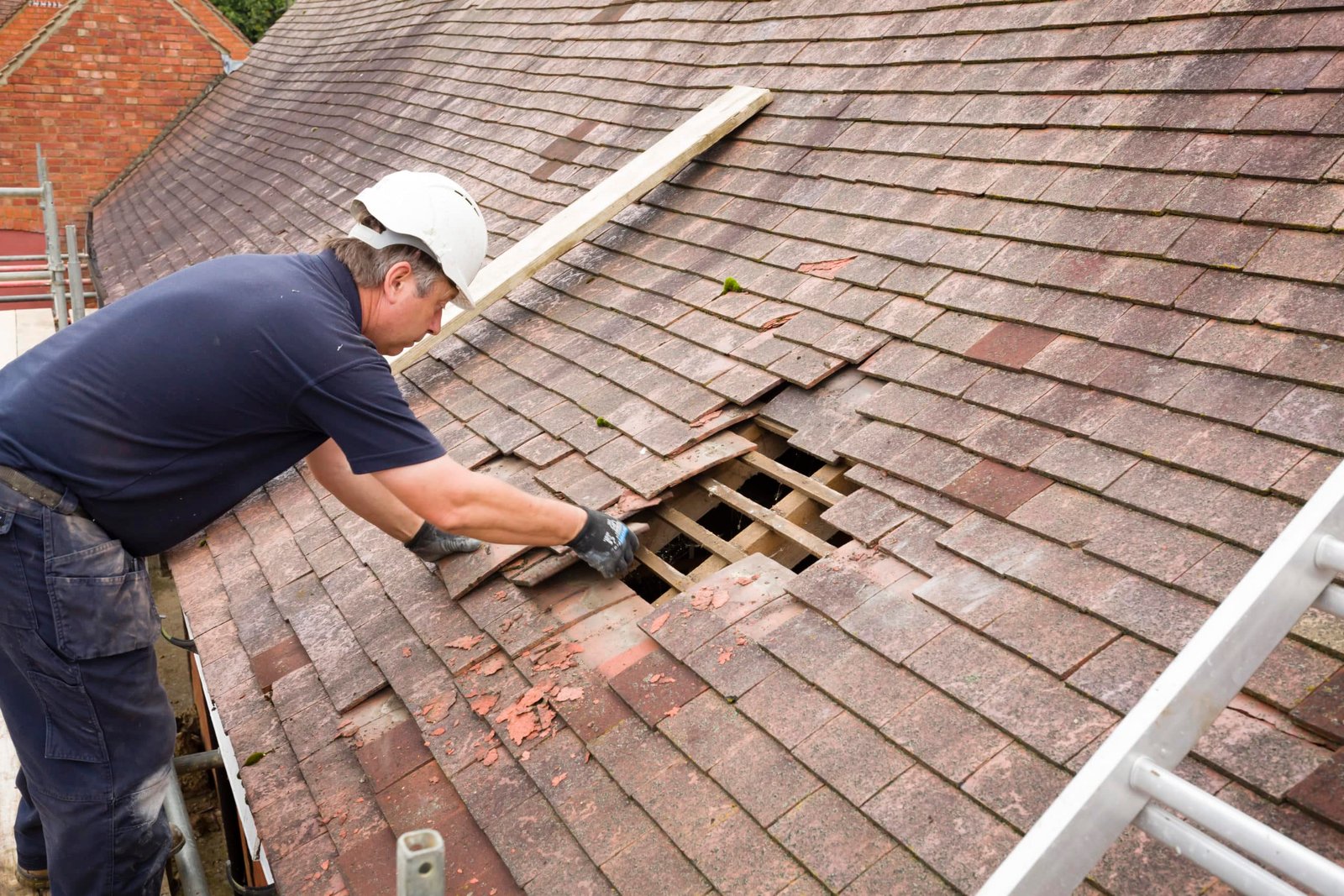
High winds, heavy rain, and aging materials can all cause shingles to crack, curl, or go missing altogether. Even one or two displaced shingles can leave your roof vulnerable to water infiltration. This type of damage is often repairable—but only if caught early.
Leaks and Water Damage
Water damage is one of the most telling signs that something is wrong. Staining on your ceiling, peeling paint near your roofline, and damp insulation in the attic are all indicators that water is getting in. The tricky part? The entry point is often not directly above the visible damage, making proper diagnosis essential.
Sagging Roof Deck
A sagging roof is a structural red flag. It typically points to long-term moisture damage to the decking or underlying supports. This kind of damage usually warrants more extensive work and shouldn’t be delayed.
Damaged Flashing
Flashing is the thin metal material used to seal joints and transitions on your roof—around chimneys, skylights, and vents. When flashing cracks or pulls away, those seams become entry points for water. Flashing repairs are relatively straightforward but critical to get right.
Granule Loss
Asphalt shingles shed granules over time, especially as they age. If you’re noticing granule buildup in your gutters or bare patches on your shingles, your roof’s protective layer is deteriorating. This is often a precursor to larger problems down the line.
Repair vs. Replace: How to Decide
This is the question every homeowner eventually faces. There’s no single right answer, but several key factors can help guide the decision.
Age of the Roof
Most asphalt shingle roofs last between 20 and 30 years. If your roof is approaching or past that range, repairs may only delay the inevitable. A newer roof with isolated damage, on the other hand, is usually a strong candidate for repair.
Extent of the Damage
A good rule of thumb: if damage affects less than 30% of your roof, repair is likely the more cost-effective route. Beyond that threshold, a full replacement often makes more financial sense—especially when you factor in labor costs for multiple rounds of patching.
Cost Comparison
Get a detailed quote for both options before deciding. Sometimes the gap between repair and replacement is smaller than expected, and a new roof comes with the added benefit of warranties and improved energy efficiency.
Insurance Coverage
If the damage was caused by a covered event—like a storm or hail—your homeowner’s insurance may cover part or all of the cost. Document everything with photos and contact your insurer early in the process.
What to Expect from a Professional Roof Repair
Once you’ve decided to move forward with repairs, knowing what the process involves helps set realistic expectations.
Inspection First
Any reputable contractor—including the team at Skyline Construction Group—will start with a thorough inspection before quoting the job. This involves assessing the visible damage, checking the attic for signs of moisture intrusion, and evaluating the overall condition of the roof.
Written Estimate
A professional repair job should come with a detailed written estimate that breaks down labor, materials, and timeline. Be cautious of contractors who offer only verbal quotes or pressure you into quick decisions.
The Repair Process
For most common repairs, the process is relatively quick. Shingle replacement, flashing repairs, and resealing around roof penetrations can often be completed within a day. More extensive work—like replacing sections of decking—may take longer.
Post-Repair Inspection
Once the work is done, a walkthrough with your contractor ensures that everything was addressed as planned. Ask to see photos of any areas that are difficult to access from the ground.
DIY Roof Repair: Proceed with Caution
It’s tempting to tackle minor repairs yourself. For small tasks—like resealing a lifted shingle or clearing debris from gutters—DIY can be perfectly reasonable. But most roof repairs benefit from professional assessment, even if the fix seems minor.
Here’s why: what looks like surface damage often has an underlying cause. Replacing a shingle without identifying why it failed in the first place means the problem is likely to recur. Professionals not only fix the visible issue—they investigate the root of it.
Safety is also a real consideration. Working at height carries significant risk, and the cost of a professional repair is almost always less than the cost of an injury.
Tips for Maintaining Your Roof Long-Term
Prevention goes a long way. A few simple habits can extend the life of your roof significantly:
- Schedule annual inspections, ideally in spring and fall, to catch small issues before they escalate.
- Keep gutters clean. Clogged gutters cause water to back up under your shingles, accelerating deterioration.
- Trim overhanging branches to reduce debris accumulation and the risk of branches falling on your roof.
- Check your attic regularly for signs of moisture, mold, or daylight coming through the roof deck.
- Act quickly after storms. Post-storm inspections catch wind and hail damage before water has a chance to work its way in.
Make the Right Call for Your Roof
Roof repair protects your property from escalating structural damage, prevents costly interior issues caused by water intrusion, and preserves the long-term value of your investment when addressed quickly and professionally. Damage doesn’t resolve on its own—and the longer a problem goes unaddressed, the more likely it is to spread, compromise surrounding materials, and increase overall costs. What starts as a few missing shingles can quickly turn into insulation damage, mold growth, or even structural deterioration.
Skyline Construction Group specializes in roof repair and replacement for homeowners who want the job done right. Their team brings the expertise to accurately diagnose damage, provide transparent pricing, and deliver quality workmanship that holds up over time. Reach out today for an inspection and take the guesswork out of protecting your home.