









Cities face a unique architectural challenge. Planners must keep public spaces open, inviting, and easy to navigate. At the same time, protecting pedestrians and storefronts from vehicle impacts remains a massive priority. Urban designers constantly balance these two opposing needs. Heavy concrete barriers look intimidating and can easily ruin the visual appeal of a plaza, retail street, or corporate campus.
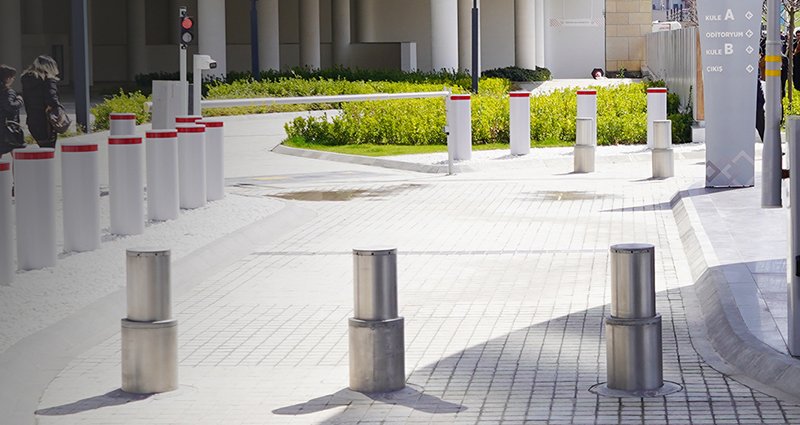
Security measures have evolved significantly over the past decade to address this aesthetic problem. Retractable systems now offer robust protection without creating a fortress-like atmosphere. Telescopic bollards sit at the center of this urban design shift. They provide a heavy-duty physical barrier when necessary and drop completely below ground when the area requires open access.
This subtle approach to public safety fundamentally changes how we experience commercial zones and public squares. Businesses can protect their high-value assets securely. Shoppers and pedestrians can walk freely without navigating maze-like blockades. The surrounding landscape remains clean, uncluttered, and highly functional.
The Shift Away from Concrete Fortresses
Historically, securing a building meant installing permanent, immovable objects. Massive concrete planters, heavy steel gates, and permanent steel posts dominated the landscape. While these methods stopped unauthorized vehicles, they also created a harsh, unwelcoming environment. Retailers noticed that highly fortified storefronts often deterred foot traffic. People want to feel safe, but they do not want to feel trapped.
Modern security solutions favor flexibility. Urban centers require adaptable spaces that can host a farmer’s market on a Saturday morning and return to standard street parking by Monday. Permanent fixtures limit how a space functions.
Retractable security posts solve this spatial issue beautifully. By sinking flush with the pavement, they instantly open up a previously restricted zone. A town square can lock down its perimeter during a large public gathering. Once the crowds disperse, the barriers are lowered, and normal delivery traffic resumes seamlessly.
Retaining the Flow of Foot Traffic
Public spaces thrive on accessibility. People need clear pathways to walk, cycle, and push strollers. Bulky security measures create bottlenecks. During an emergency, a dense cluster of permanent barriers can even hinder the quick evacuation of a crowded area.
Telescopic bollards maintain the natural flow of pedestrian movement. Because they are typically spaced a few feet apart, individuals and small mobility devices can pass through the gaps effortlessly. The spacing is specifically calculated to block standard passenger and commercial vehicles. This intelligent spacing strategy ensures the area remains highly permeable for humans while remaining entirely closed off to cars and trucks.
Reliable Access for Authorized Vehicles
Another major advantage of retractable security systems is their operational flexibility. Facilities require routine maintenance, waste collection, and inventory deliveries. Emergency services also need immediate access to pedestrian zones.
Companies like Wentworth Protection Limited supply specialized telescopic bollards designed for high-frequency usage. These robust units allow property managers to grant access to authorized vehicles in seconds. A delivery truck can pull up, the operator can lower the barrier using a secure access key, and the vehicle can enter the premises. Once the truck clears the entry point, the bollard locks firmly back into its upright position. This keeps the perimeter secure without disrupting daily business operations.
The Psychological Impact of Invisible Security
The way a space looks directly impacts how people feel within it. Visible security threats, like armed guards or military-style barricades, can increase public anxiety. They serve as a constant visual reminder of potential danger.
Sleek, stainless steel posts offer a totally different psychological experience. They blend seamlessly into the modern architectural background. Many people walk past them daily without realizing they are heavy-duty, crash-rated security devices. By keeping the security infrastructure low-profile, property owners foster a relaxed, welcoming atmosphere. The public enjoys the peace of mind that comes with safety, without the stress of aggressive fortifications.
Frequently Asked Questions
Are retractable security posts difficult to maintain?
Most modern units require very little maintenance. Because they are housed underground, the casing protects the internal lifting mechanisms from extreme weather and debris. Periodic cleaning and lubrication of the moving parts usually keep them functioning perfectly for years.
Do they work during power outages?
Yes. While many fully automated systems rely on electricity, manual and semi-automatic versions operate using internal gas struts or simple manual lifting mechanisms. Even automated systems usually feature manual override options so emergency services can lower them during a power failure.
Can they stop heavy commercial trucks?
The stopping power depends entirely on the crash rating of the specific model. High-security versions are heavily reinforced and deeply rooted into concrete foundations. These specialized units are engineered to absorb the kinetic energy of a fast-moving, heavy-duty truck.
Designing the Safest Cities of Tomorrow
Telescopic bollards represent a forward-thinking solution in the evolution of urban security, especially as growing populations increase the need for adaptable public spaces. Property developers and city planners are now tasked with balancing protection and visual appeal, ensuring infrastructure remains secure without compromising design. The integration of smart, retractable security elements demonstrates that safety and aesthetics can successfully coexist, offering flexible access control while preserving open, attractive environments for everyday public use.
By utilizing flexible barriers, communities can maintain the open character of their neighborhoods. Businesses can secure their storefronts confidently. Ultimately, the careful application of hidden security infrastructure ensures our cities remain vibrant, accessible, and protected for generations to come.